The V&A, Britain’s museum of decorative arts, is one of my favorite places. The main museum is near Hyde park, and the main floor has loads of popular exhibits, like the armor collection. My usual route though is straight upstairs to the quiet 4th floor, down the corridors of furniture and into the studio pottery area. They have a treasure trove of English and Japanese pots, plus fascinating exhibits like a reconstruction of Lucy Rie’s postwar London studio.
Like any big museum the V&A has far more objects than it can exhibit, so when I read last year they had built a new storehouse that was open to the public I knew I wanted to go. Even better though, I saw on their website that the Storehouse has a program called Order an Object, where visitors can request five objects from the online catalog and make an appointment to see and handle them up close. It’s free and available to everyone, no UK citizenship needed.
For a potter this is irresistible. The way you can tell a potter in a ceramics shop is that they’re the one picking up the pots, turning them over and running their hands along the sides.
I decided I wanted to see some old pots with dark iron saturate glazes. I found two Song Dynasty (about 1000 years old) pots, a Japanese “oil spot” pot from about 120 years ago, and a more contemporary Bernard Leach pot for comparison. That’s four items, I had one more to go. I thought about what Michele might be interested in and had a brainwave. It turns out they have a 200 year old Shishi gashira (“lion head”, the Japanese lion dance costume), in the same tradition as Michele’s Shishimai group’s gashira.
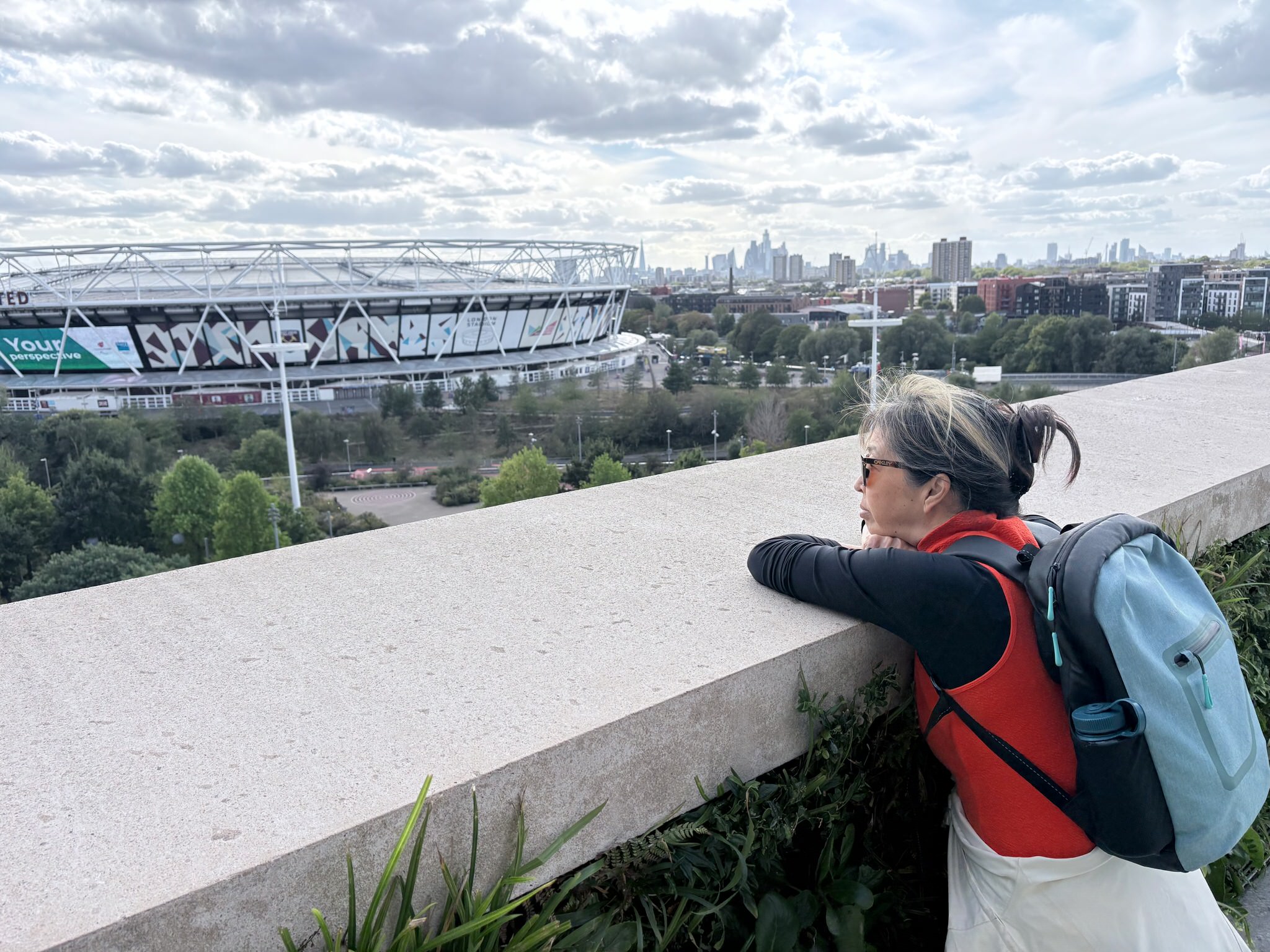
The V&A Storehouse is on the east side of London in the Queen Elisabeth Olympic Park, which was the center of the 2012 Olympic Games. The walk to the Storehouse from Stratford Station goes by the Olympic Stadium (now evidently home to West Ham United).
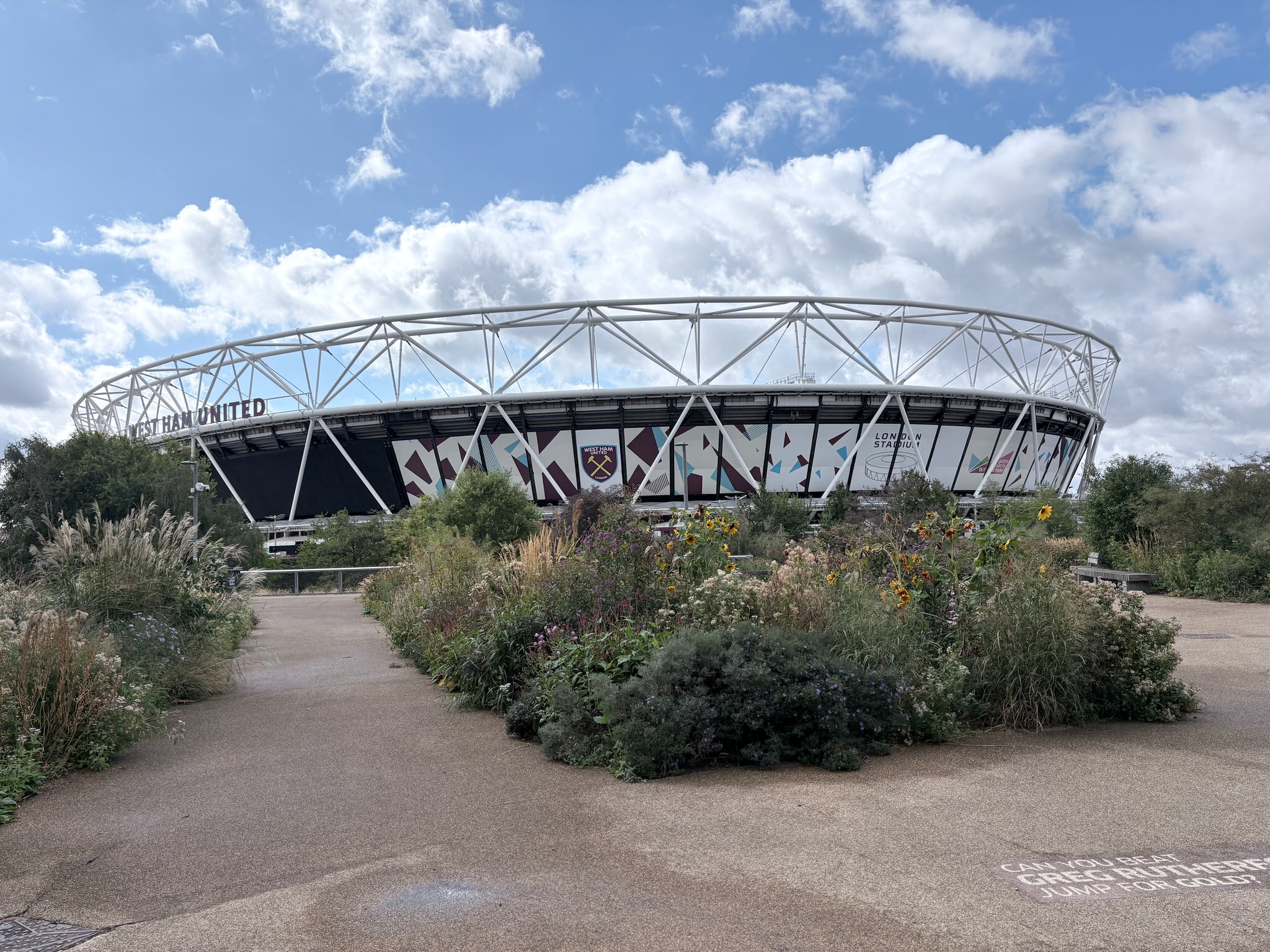
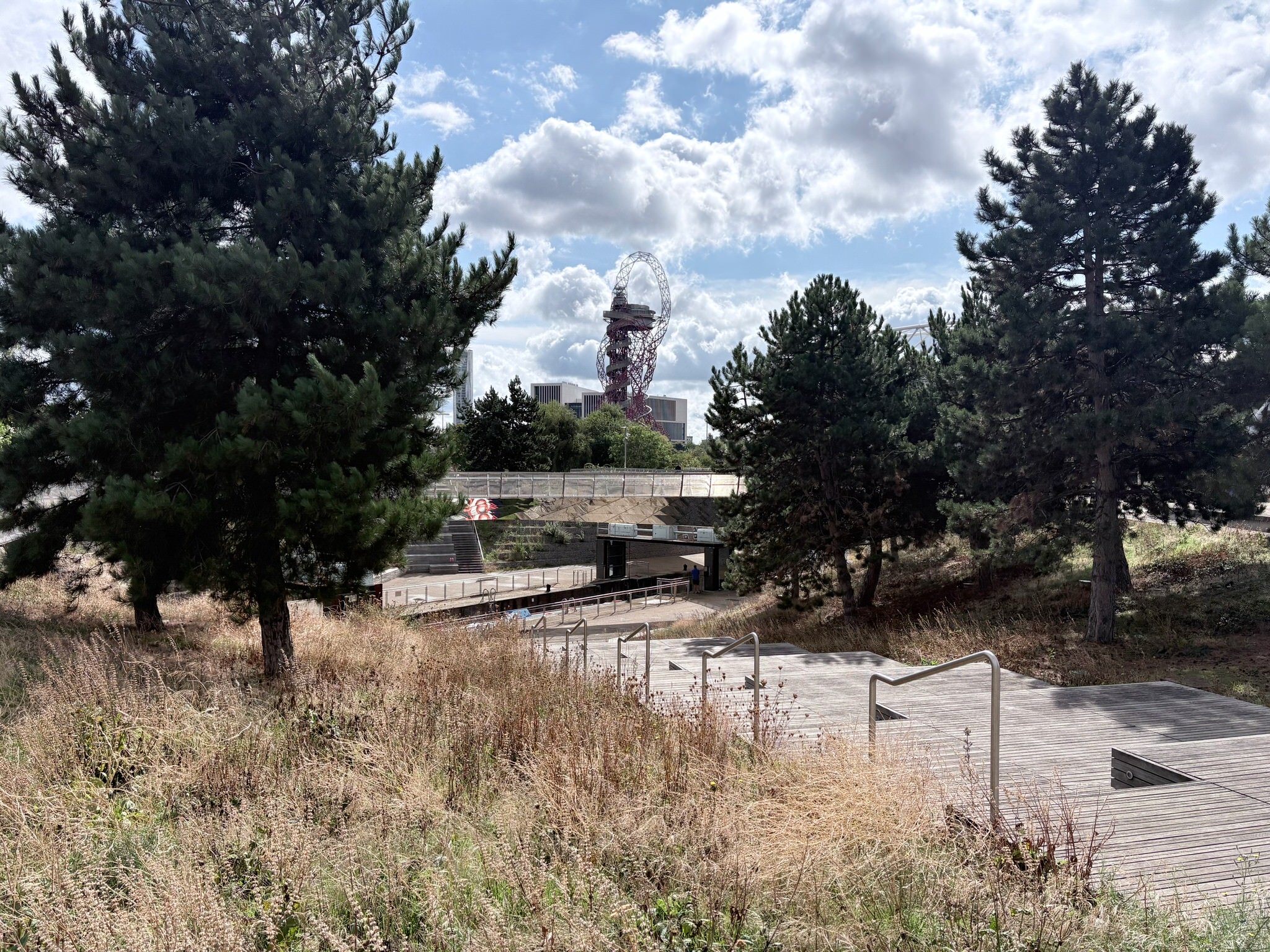
The area used to be the “Lower Lea Valley” and was the heart of London’s dirtiest industries before devolving into polluted wasteland. It was a massive cleanup to turn it into the pleasant park setting it is today.
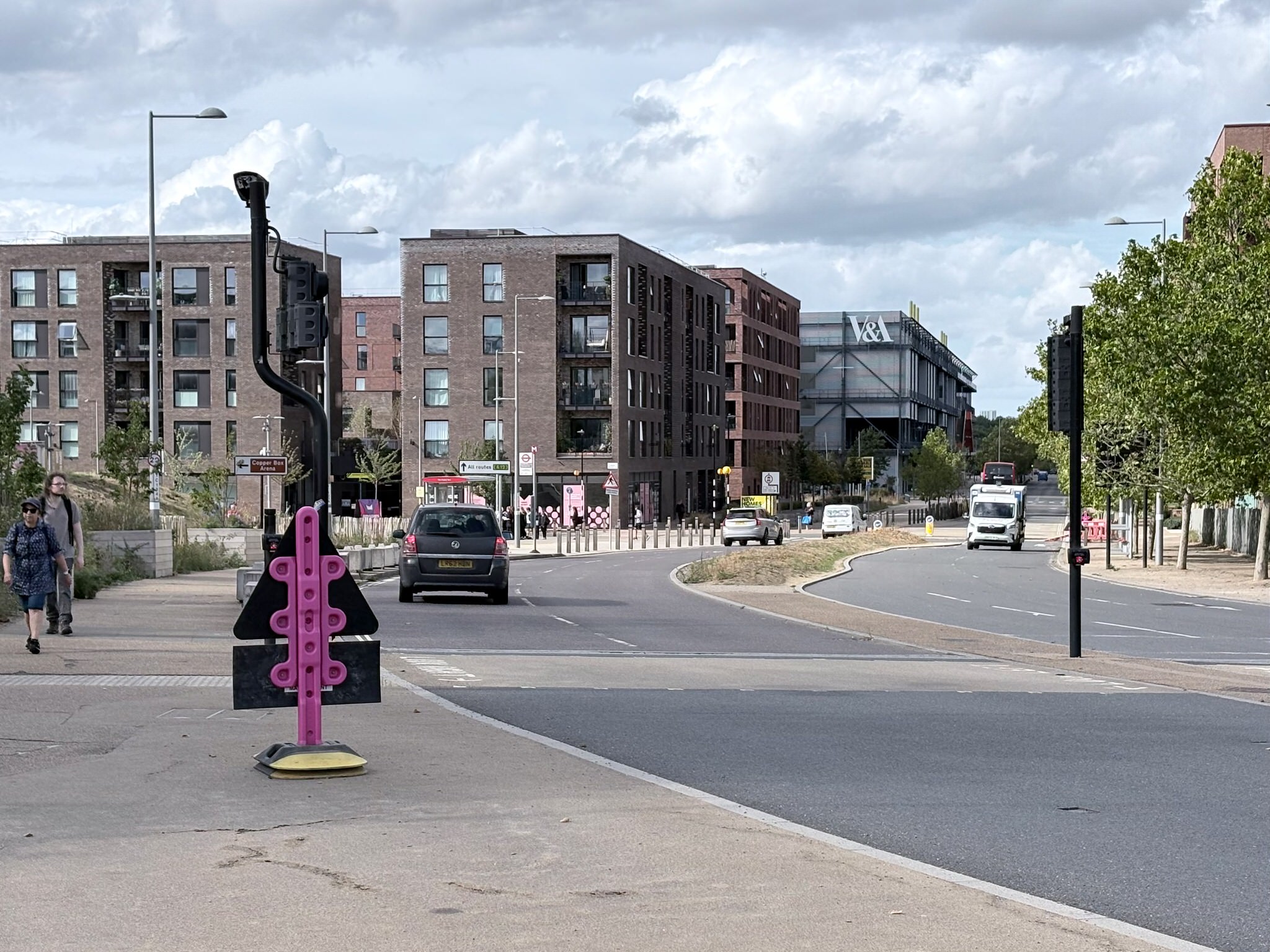
The Storehouse itself is on the edge of what was the Olympic Village.
The Storehouse is mostly a working facility, but on the south end there is a public entrance that leads directly to a central courtyard, where the public can peer into the stacks and work spaces.
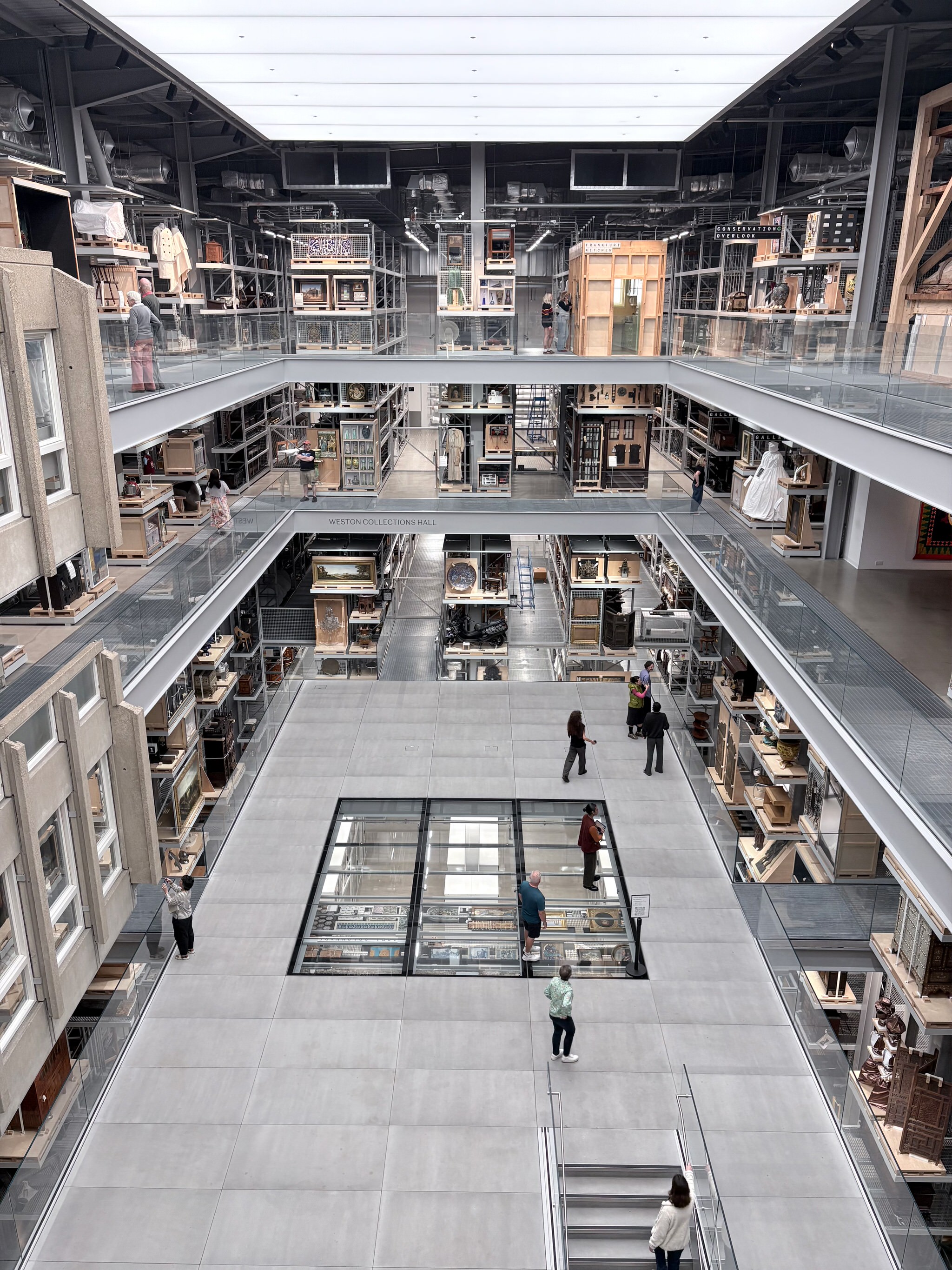
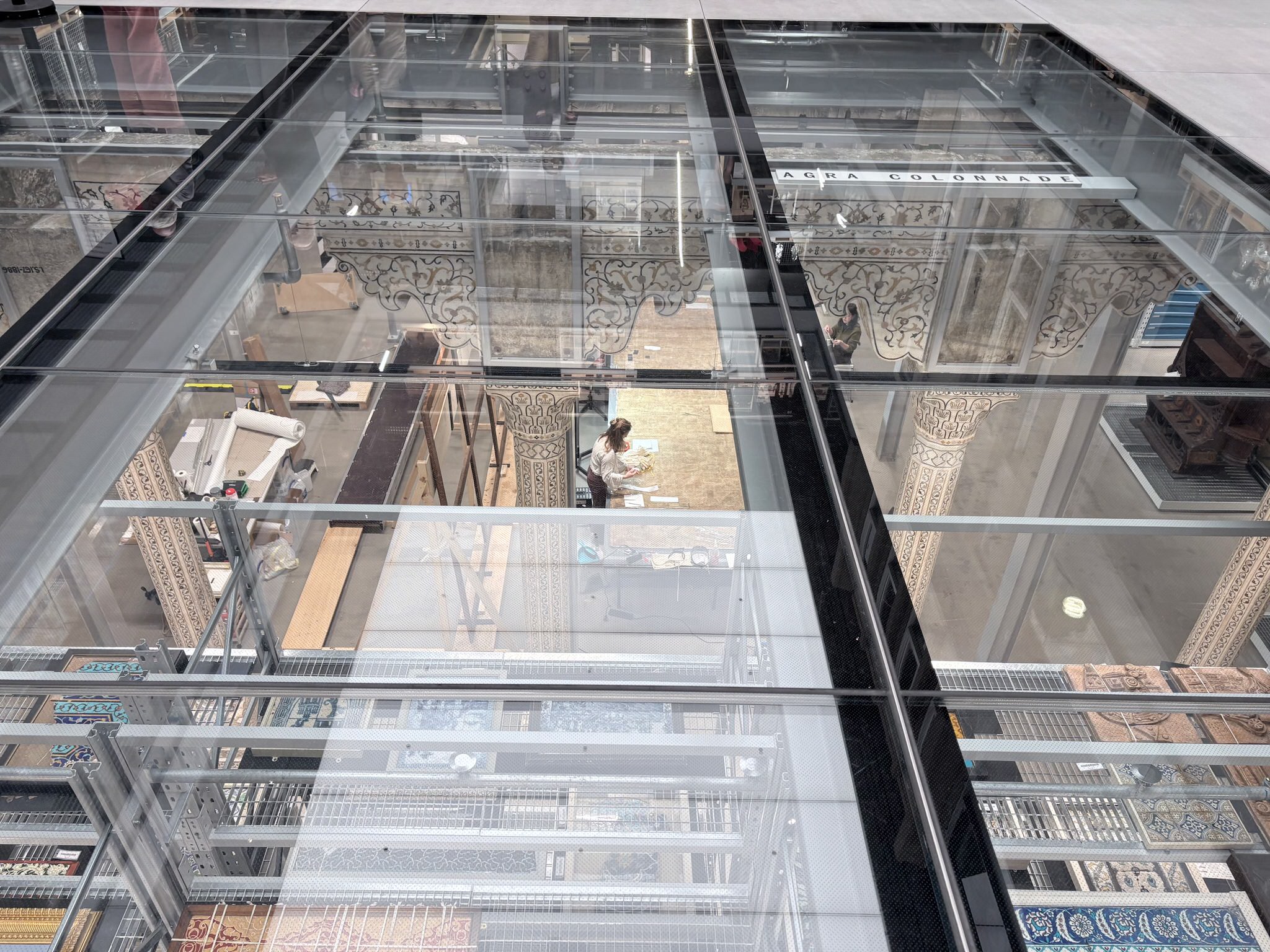
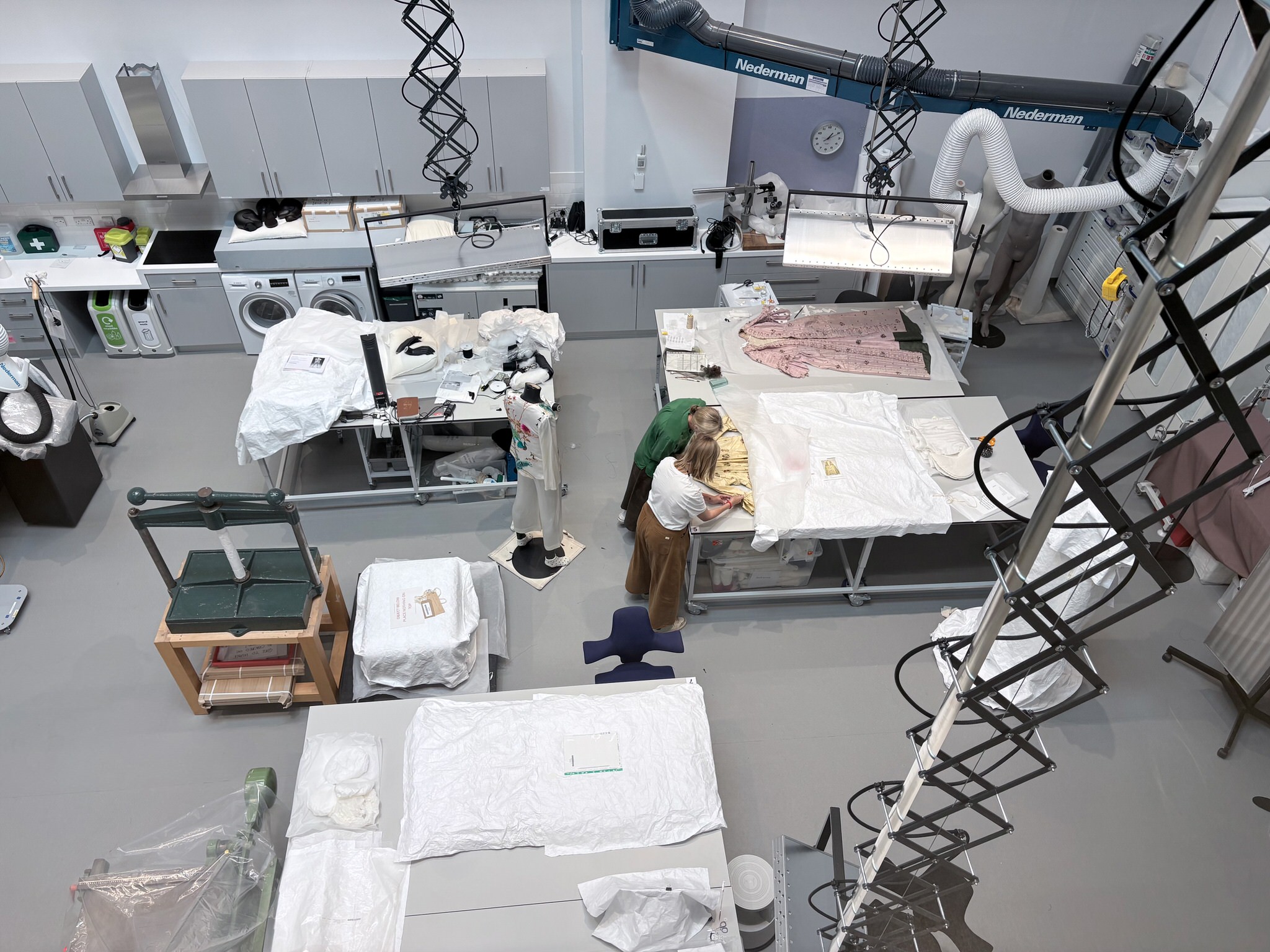
That’s a glass floor in the center there, where you can look down into a work area, where conservators conserve.
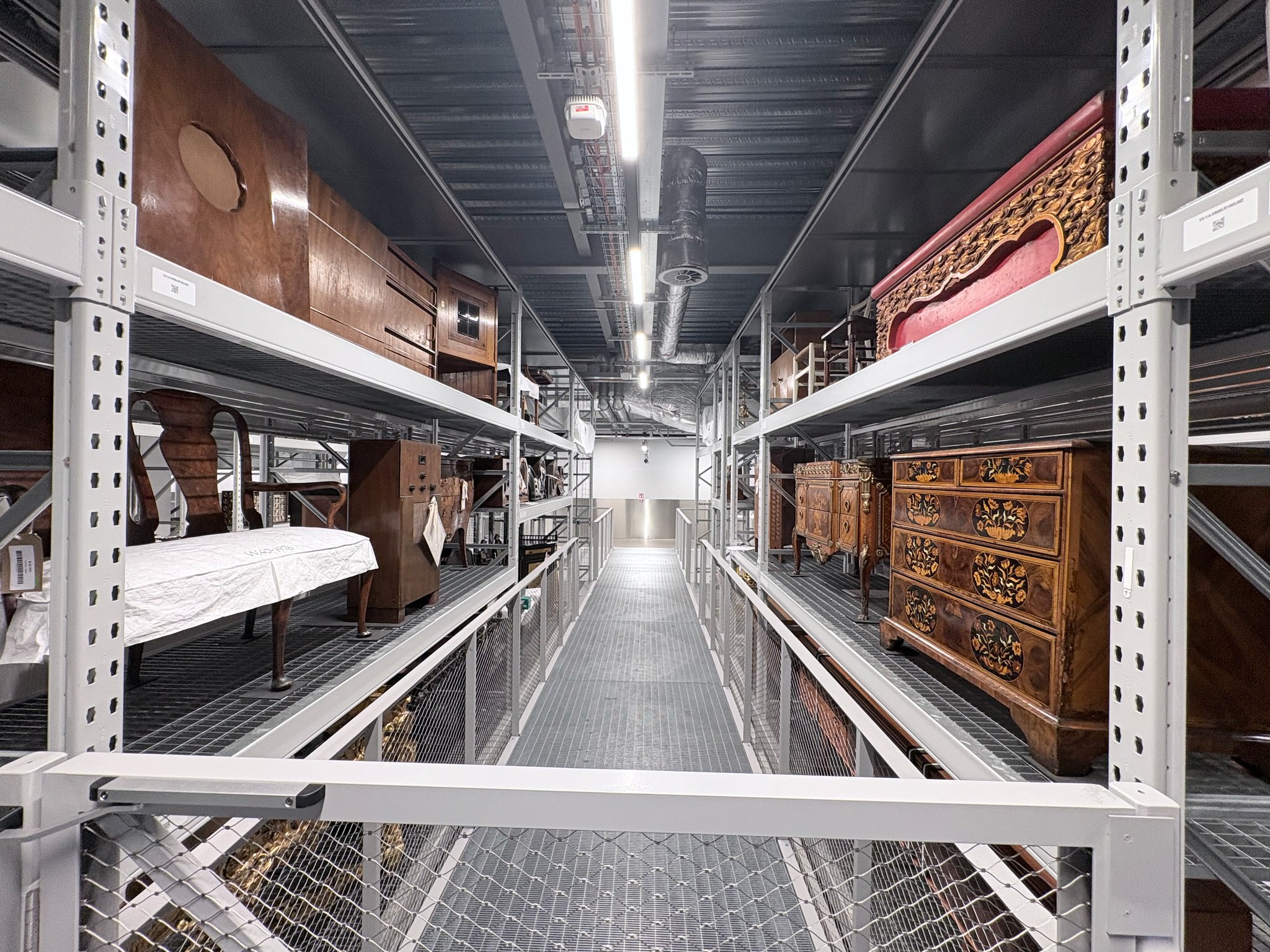
There’s also views into the stacks and other work spaces. The objects are almost all unlabeled and mostly arranged by size as far, as I could figure out. There might be a mid century modern chair next to a marble bust of a Roman.
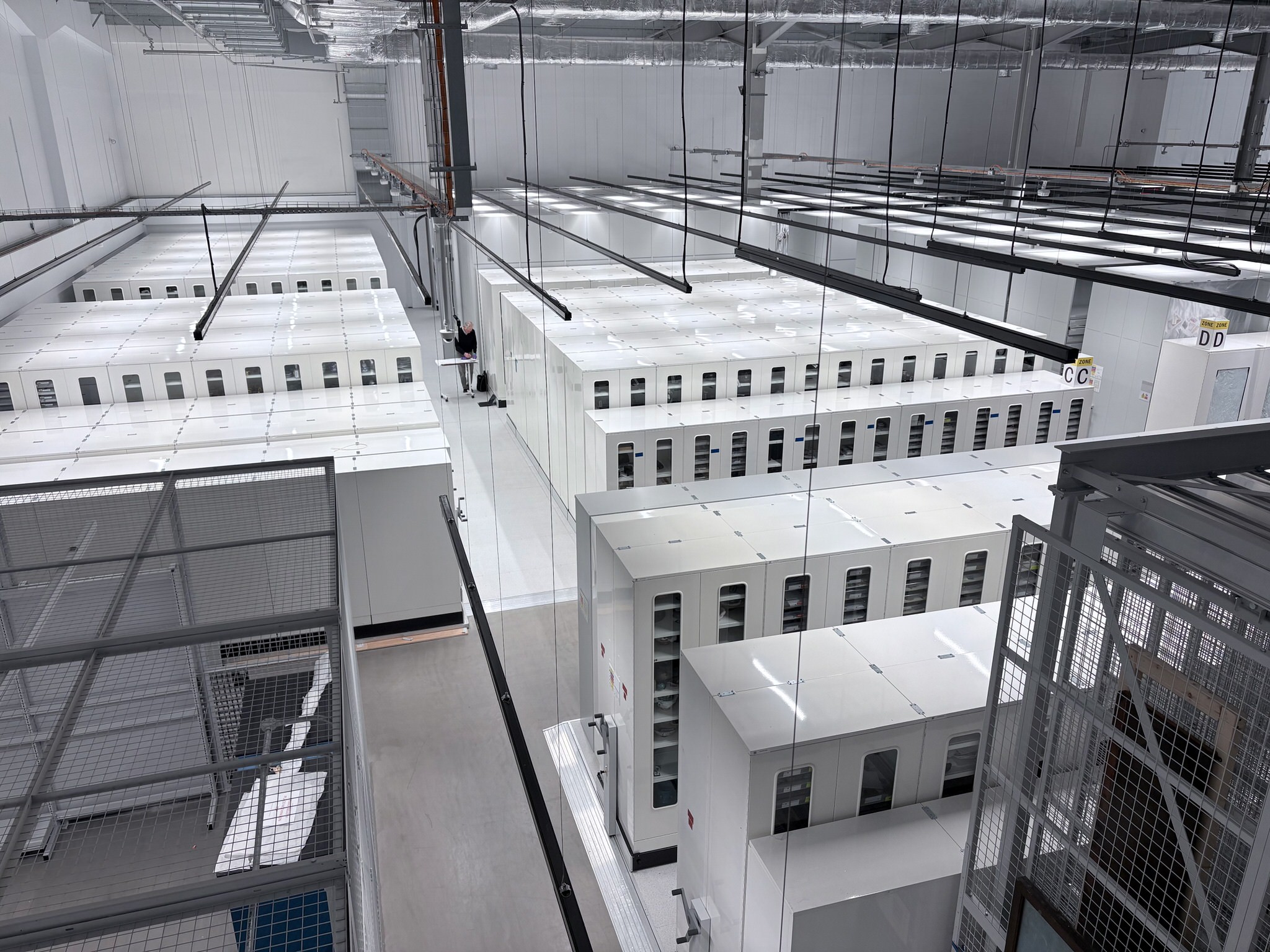
There were views down into various storage and work areas.
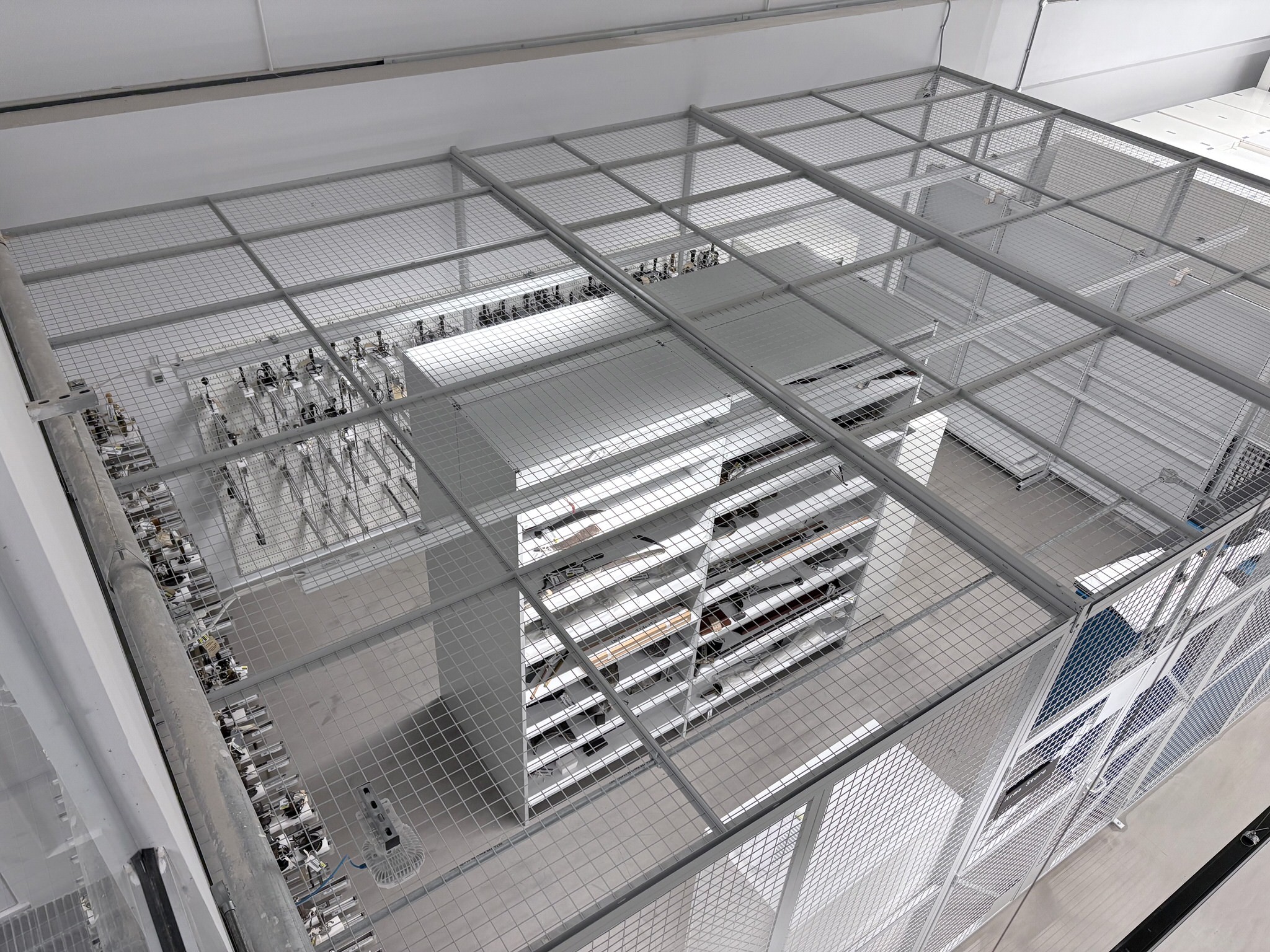
Including this securely caged collection of swords, probably no blunt tips on these weapons.
And tantalizingly a view into the room where we would get see our special objects.
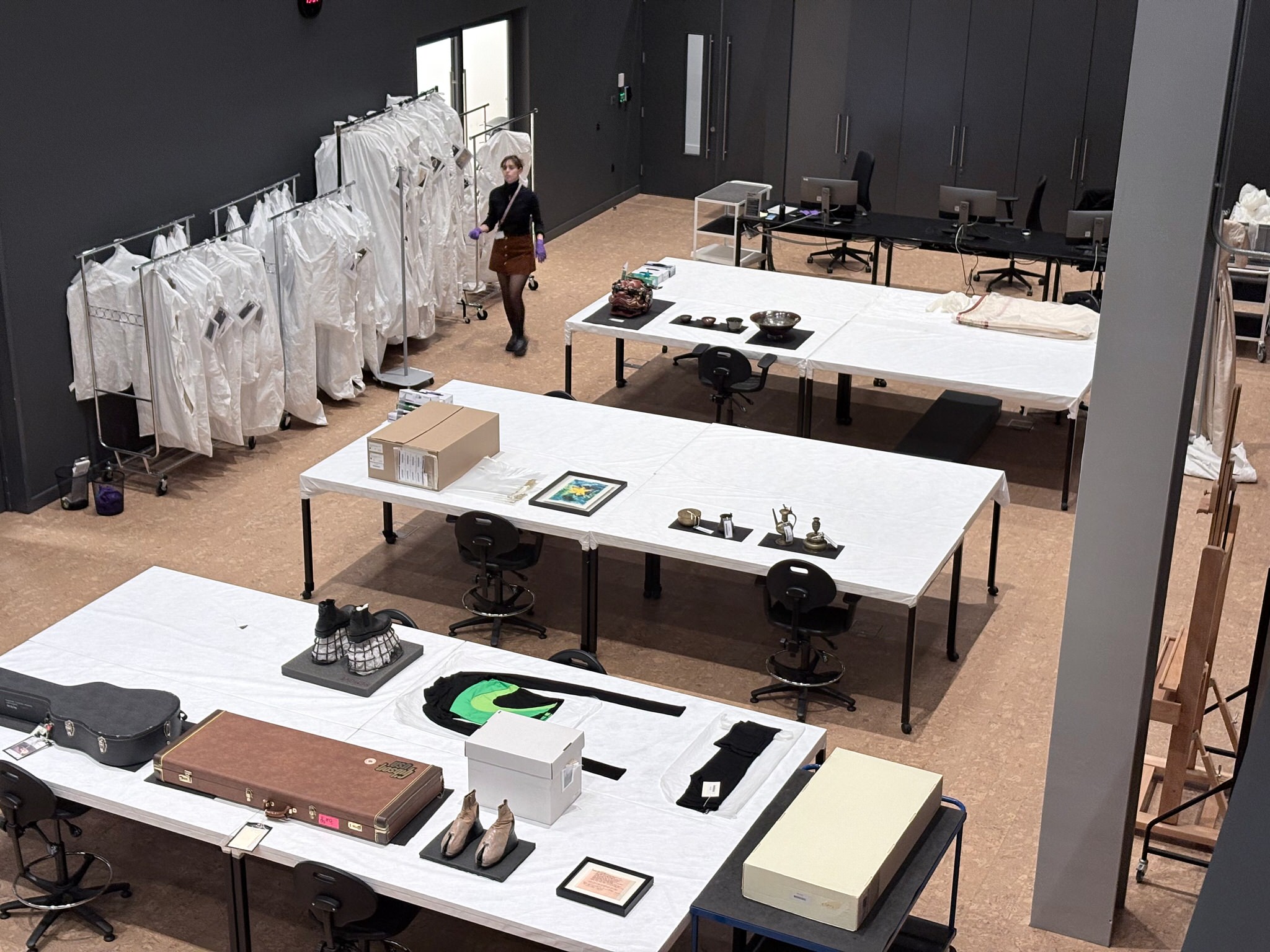
The Storehouse is the home of David Bowie’s collection of outfits and memorabilia. It looks like someone requested a Bowie outfit, platform shoes and some guitars to look at.
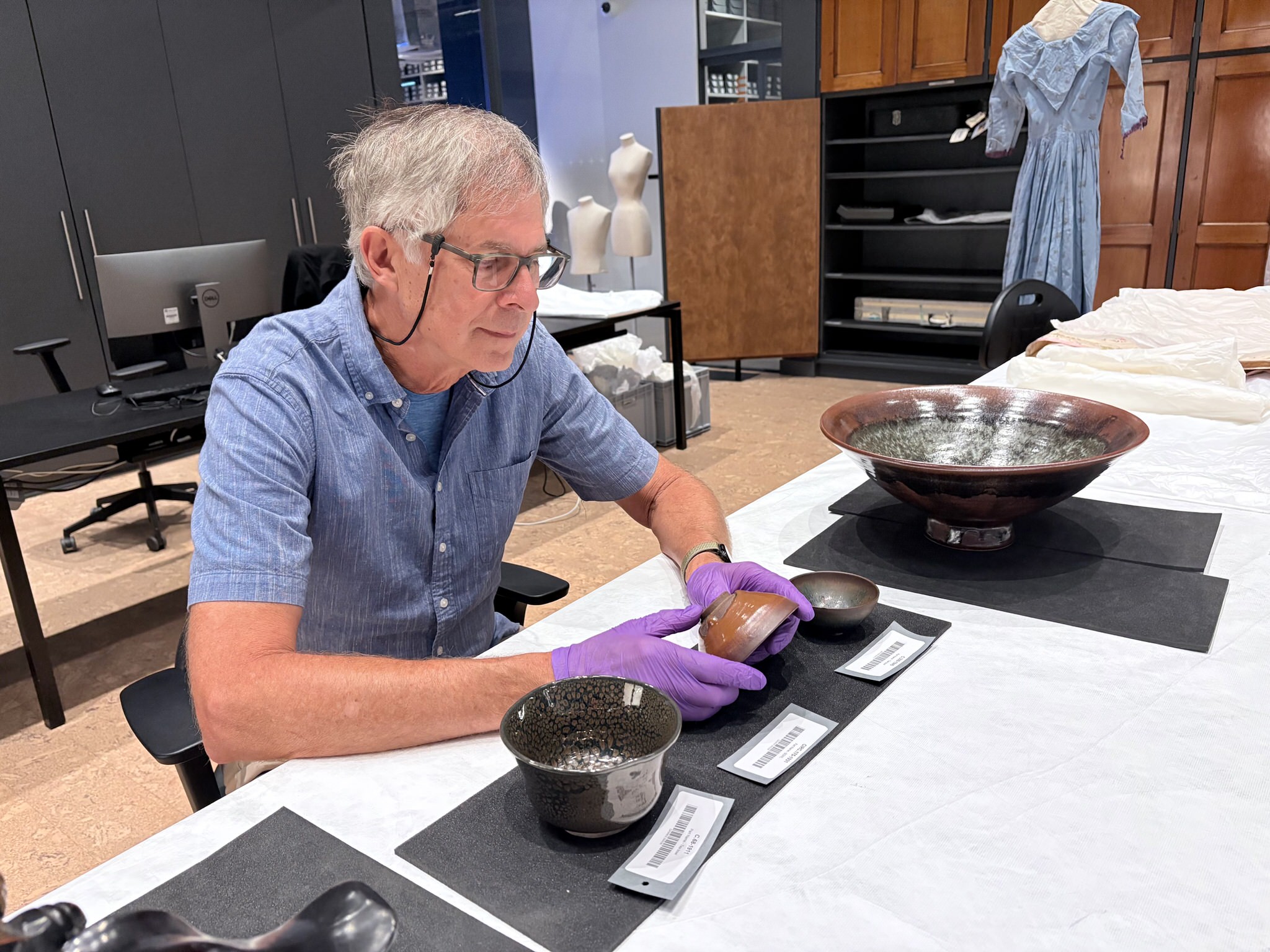
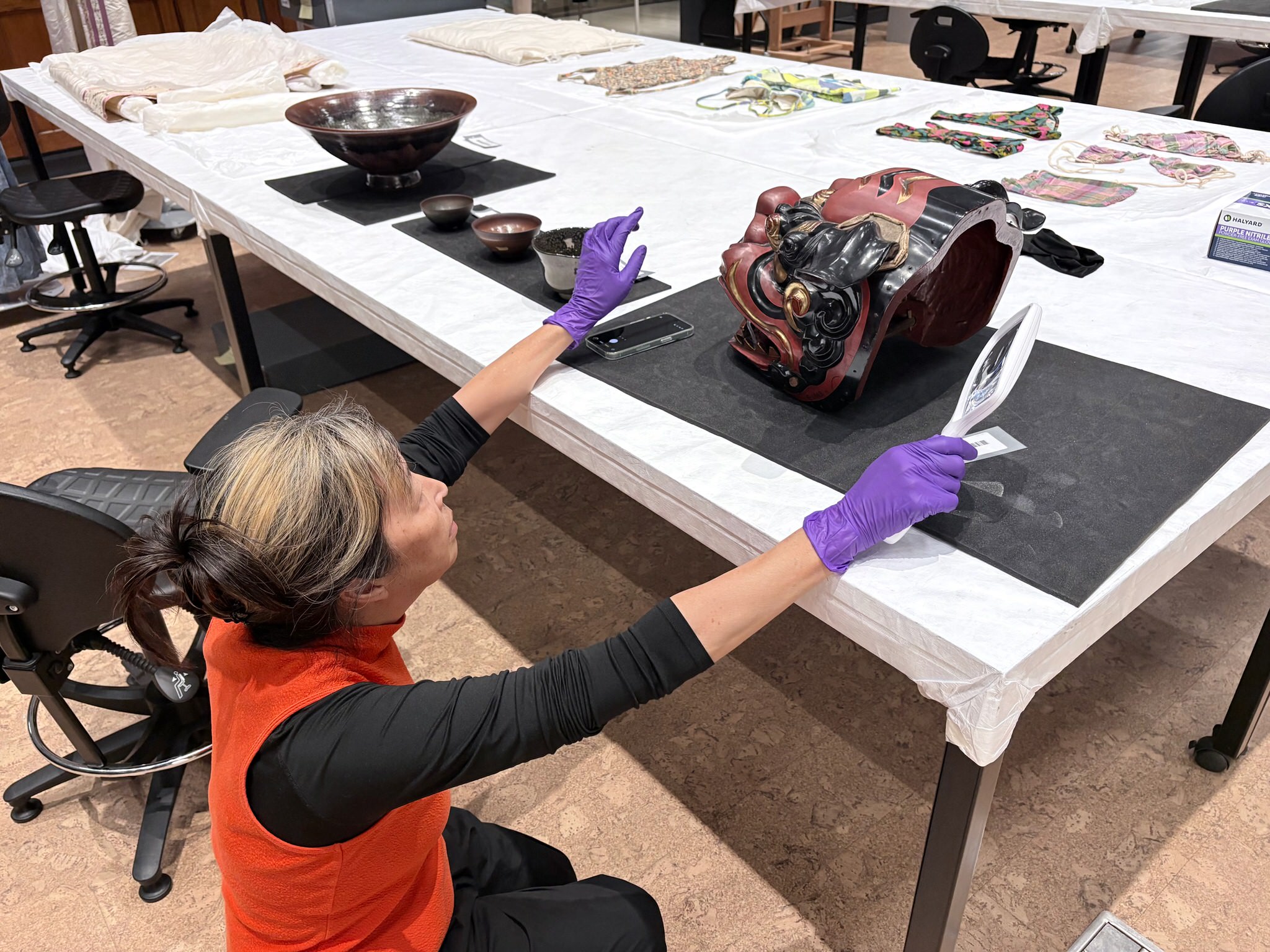
Getting to see my old pots up close was great. I didn’t realize that the Leach pot was so big, although I didn’t realize suspect that the old Song pots would be on the small side. As long as we kept the objects over the foam and close to the table they were fine with us handling them.
Michele’s Shishi stole the show though. The curators were excited that Michele was a performer of the Shishimai and were asking her questions. Although the surface of this Shishi had more red paint and less gold gilt than San Diego’s, it was striking how similar the carvings are. London Shishi is actually much lighter, although that might be because there is no aori (the fabric drape) or mane attached.
It was a memorable afternoon.