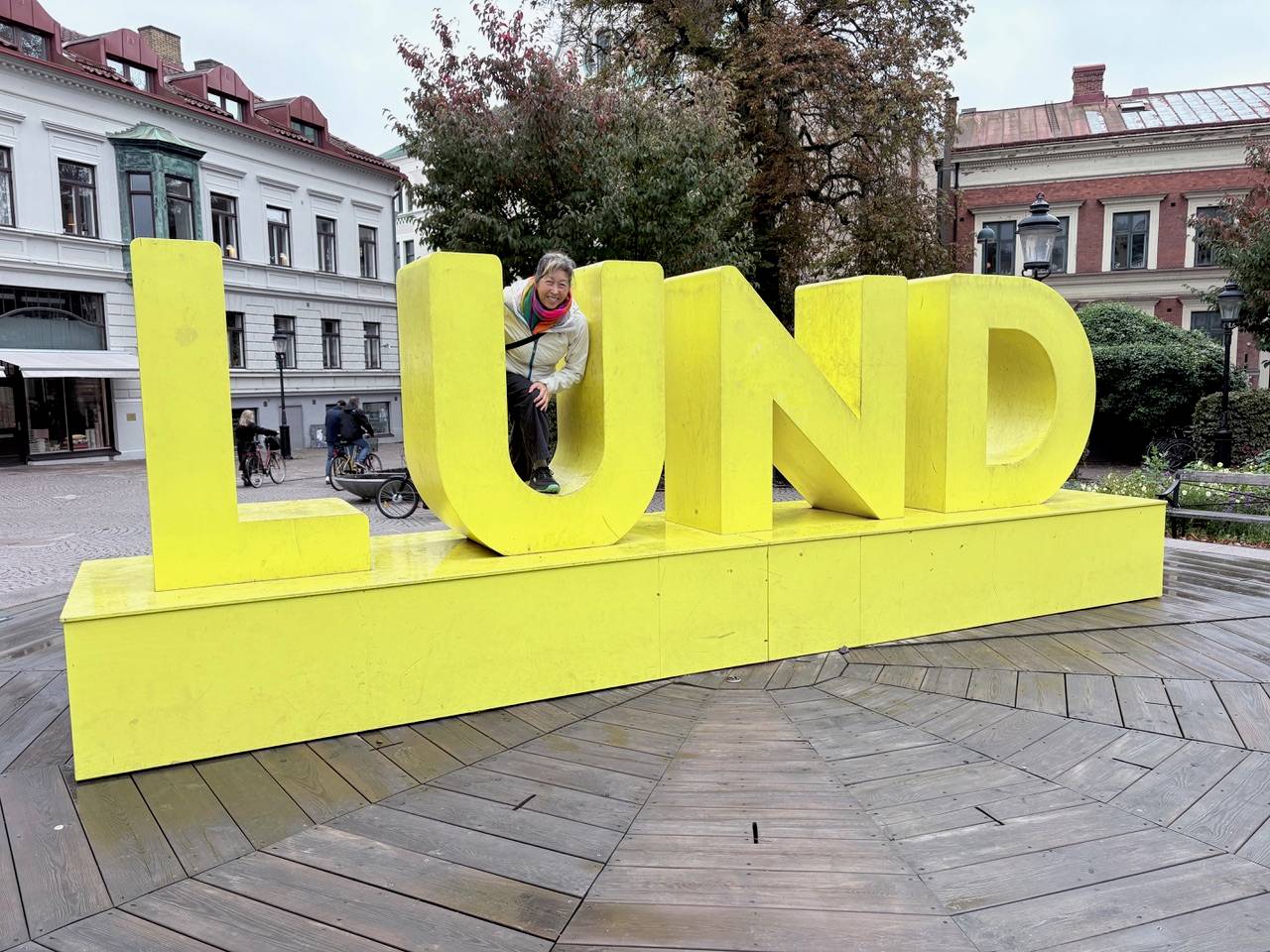
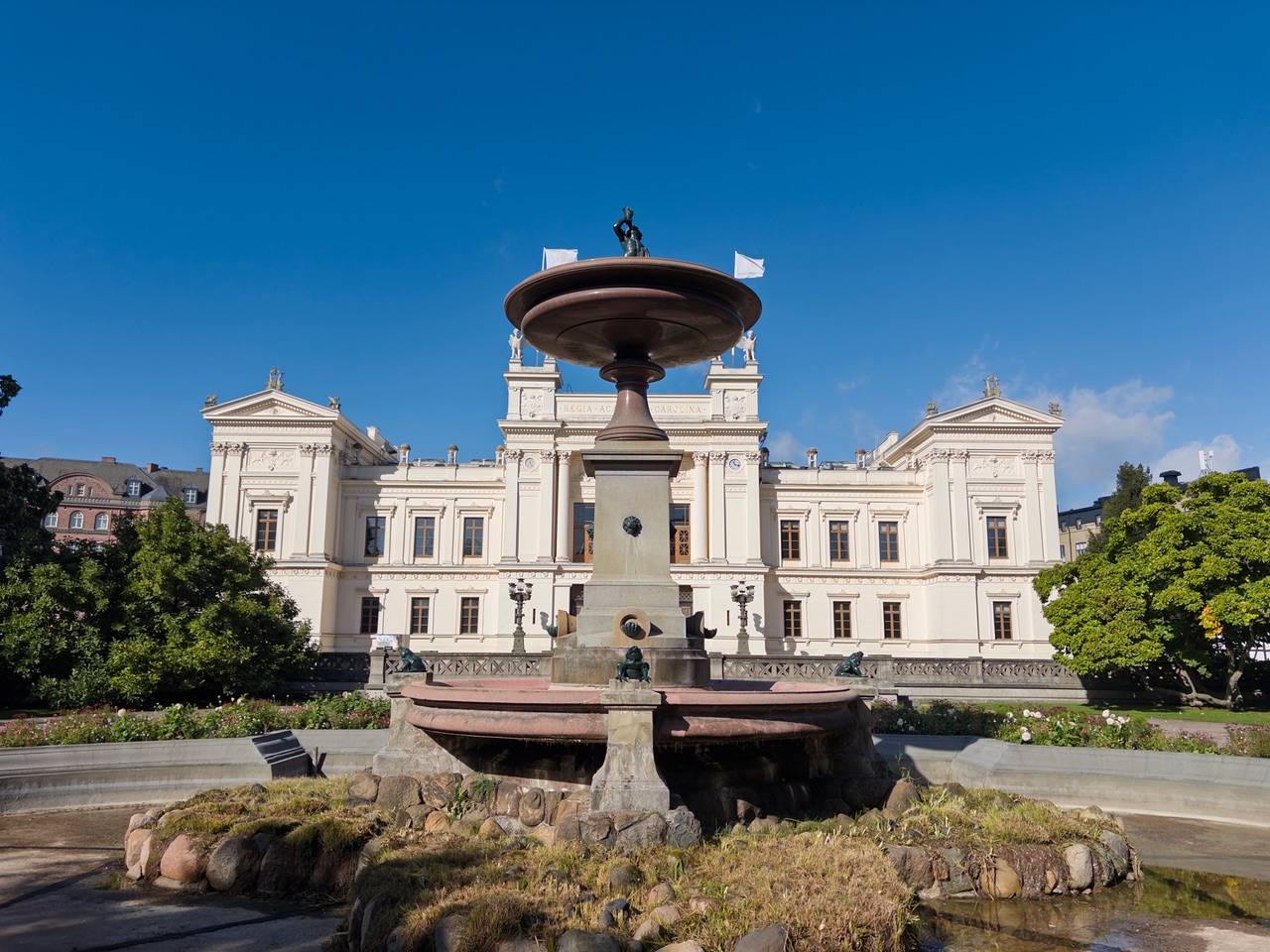
About an even 1000 years ago, in 1020, King Sweyn Forkbeard of Denmark looked around the large plain of what is now southern Sweden and decided that a good place for a defensible castle would be on a broad hill, thus founding Lund. Roll froward 400 years and the Academy of Lund was founded, then in 1666 the University of Lund. I think the university sits atop the hill now, with an observatory near the top.

We were in Lund to visit our niece Evalena, but first we had a morning to walk around on our own.
Lund is a compact town with a slightly confusing center. Sometimes a landmark jumps out in these old tangle town situations, it might be a particular building or shop. In Lund’s case it kept being this particular Chinese dumpling shop, which I recognized from the last time we were in Lund. It’s in a basement space with essentially no room to eat downstairs. There’s a counter to order dumplings and a couple of spots with high shelves to stand and eat your dumplings. There’s also a bunch of outdoor tables and chairs, usually tied up with security cables. This dumpling shop was a half block away from our hotel, and it seemed like no mater which direction we set off or returned from I would recognize the basement doors leading to the dumpling cave and my brain would say “aha! We are home!”
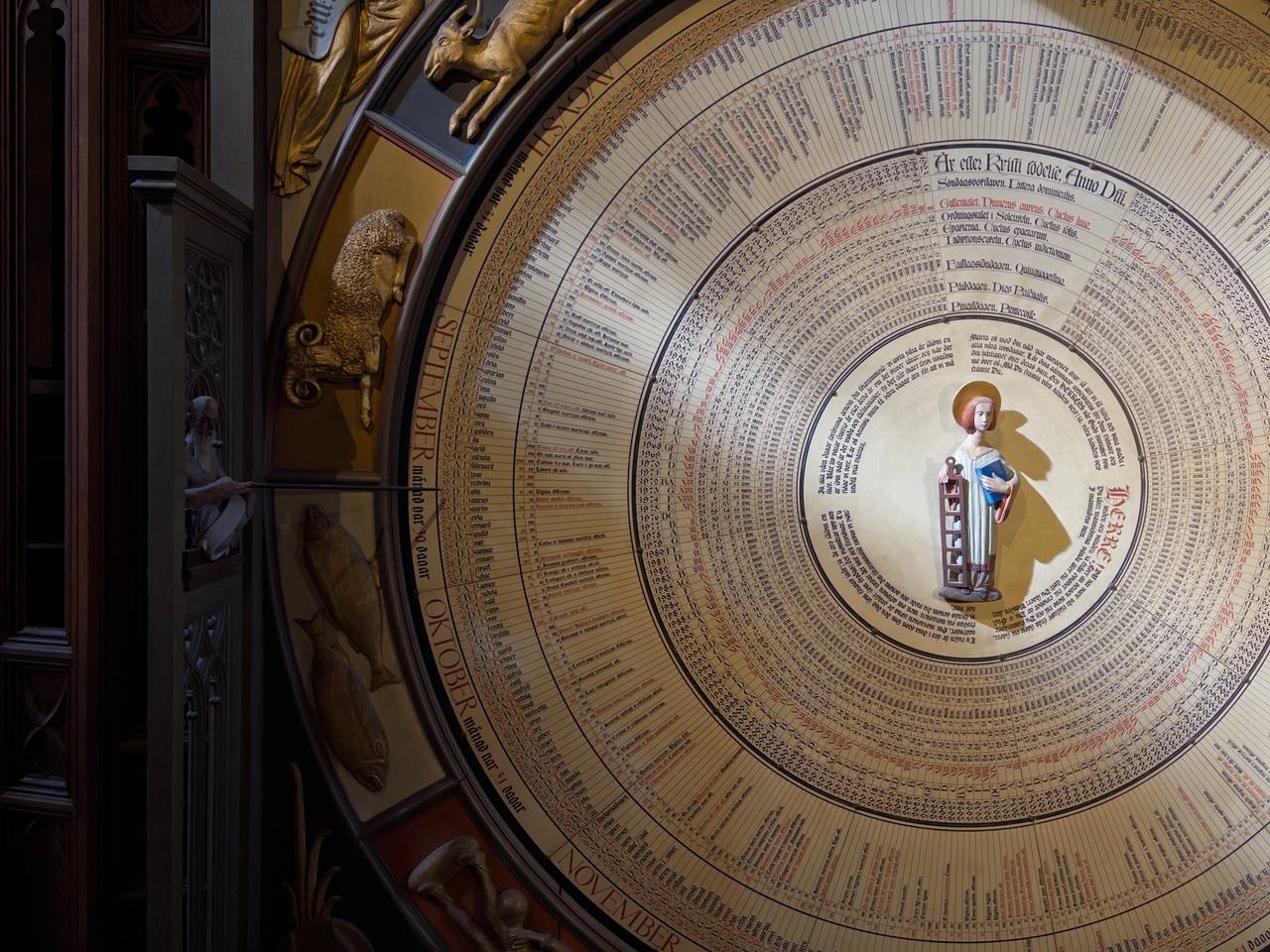
The most obvious landmark isn’t the dumpling shop, it’s the central cathedral. Probably the most memorable thing abound Lund cathedral is their awesome astrological clock, which I think I wrote about last time but I’m going to post a video again. Time of day, day of the year, moon phase, sunrise and sunset, moonrise and moon set. Probably more.
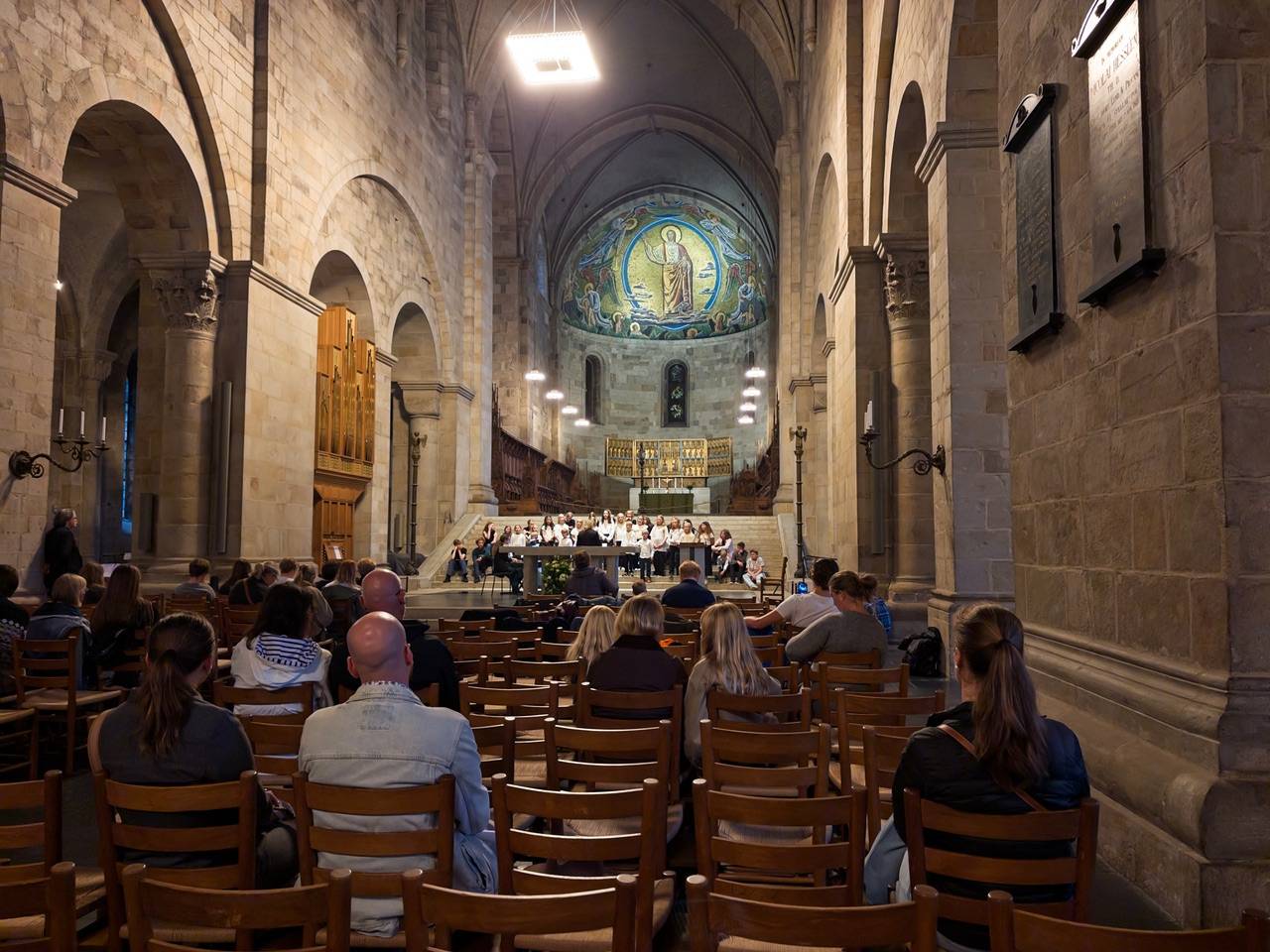
There was a children’s choir practicing on the Saturday afternoon we arrived, and the was an adult singing group with an accompanying accordion on the outside plaza. Swedes like to sing! We headed for “Fisk and Kök” for a delicious bowl of fish soup. On the way were more Swedes dancing around.
Lund isn’t large but being an old university town has endowed it with many interesting buildings, museums, gardens, sculpture and so on.
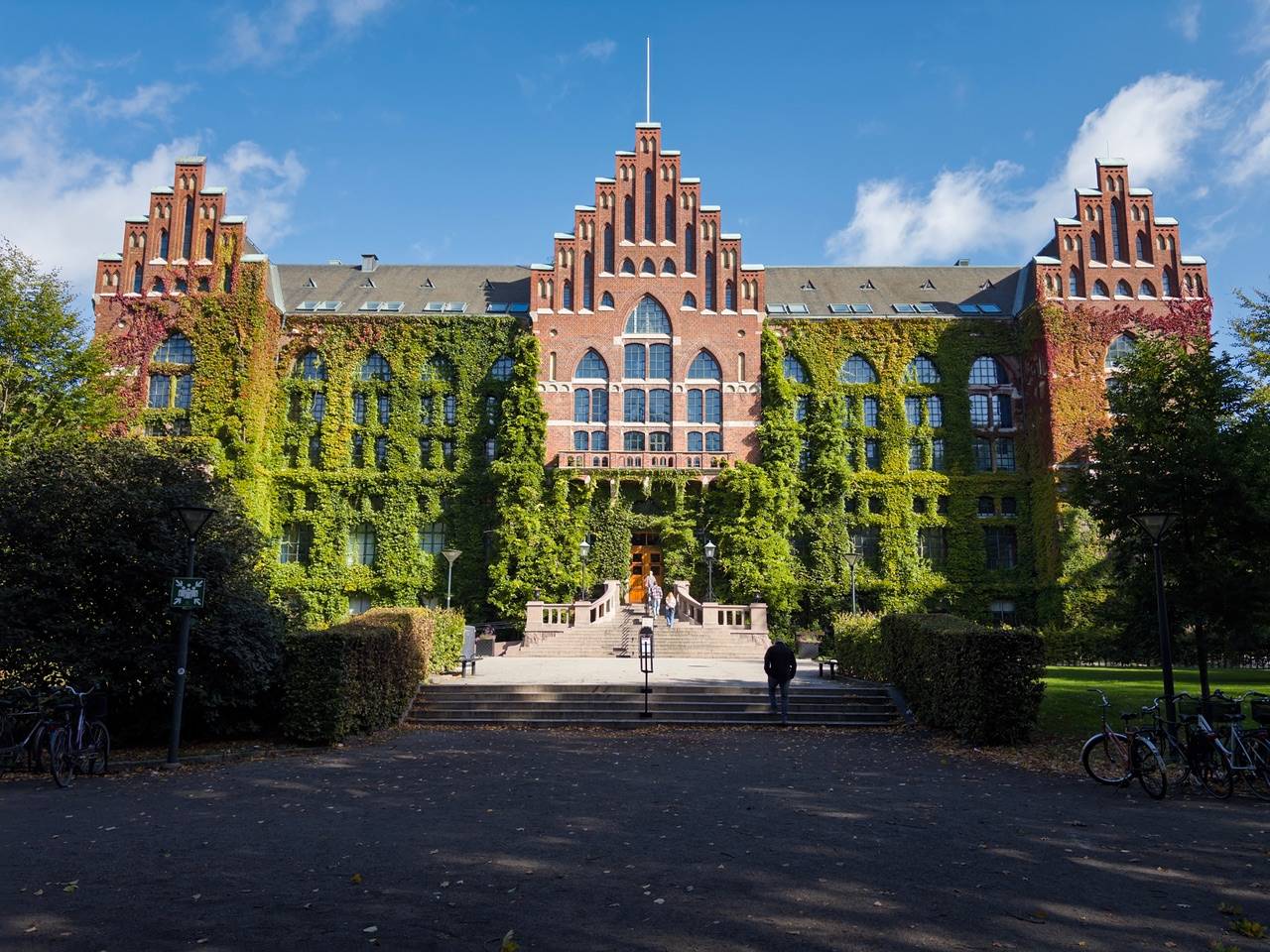 
The main library had an exhibit displaying a copy of Copernicus’s De revolutionibus orbium coelestium that was discovered in the library’s holdings. Copernicus’s book was bound together with another old book, and the only card catalog entry was hand written. A recent scanning and transcribing of the card catalog, including the old hand written cards, using AI turned up the copy.

The main library had an exhibit displaying a copy of Copernicus’s De revolutionibus orbium coelestium that was discovered in the library’s holdings. Copernicus’s book was bound together with another old book, and the only card catalog entry was hand written. A recent scanning and transcribing of the card catalog, including the old hand written cards, using AI turned up the copy.
Lund claims that their student led festival every four years is the second largest volunteer event in the world, after the Olympics. Hmmm 🤔, really? Not some Hindu festival in India? Not a huge matsuri in Japan? Not the Fête des Vignerons in Vevey?